Your business.
Our team.
Working together.
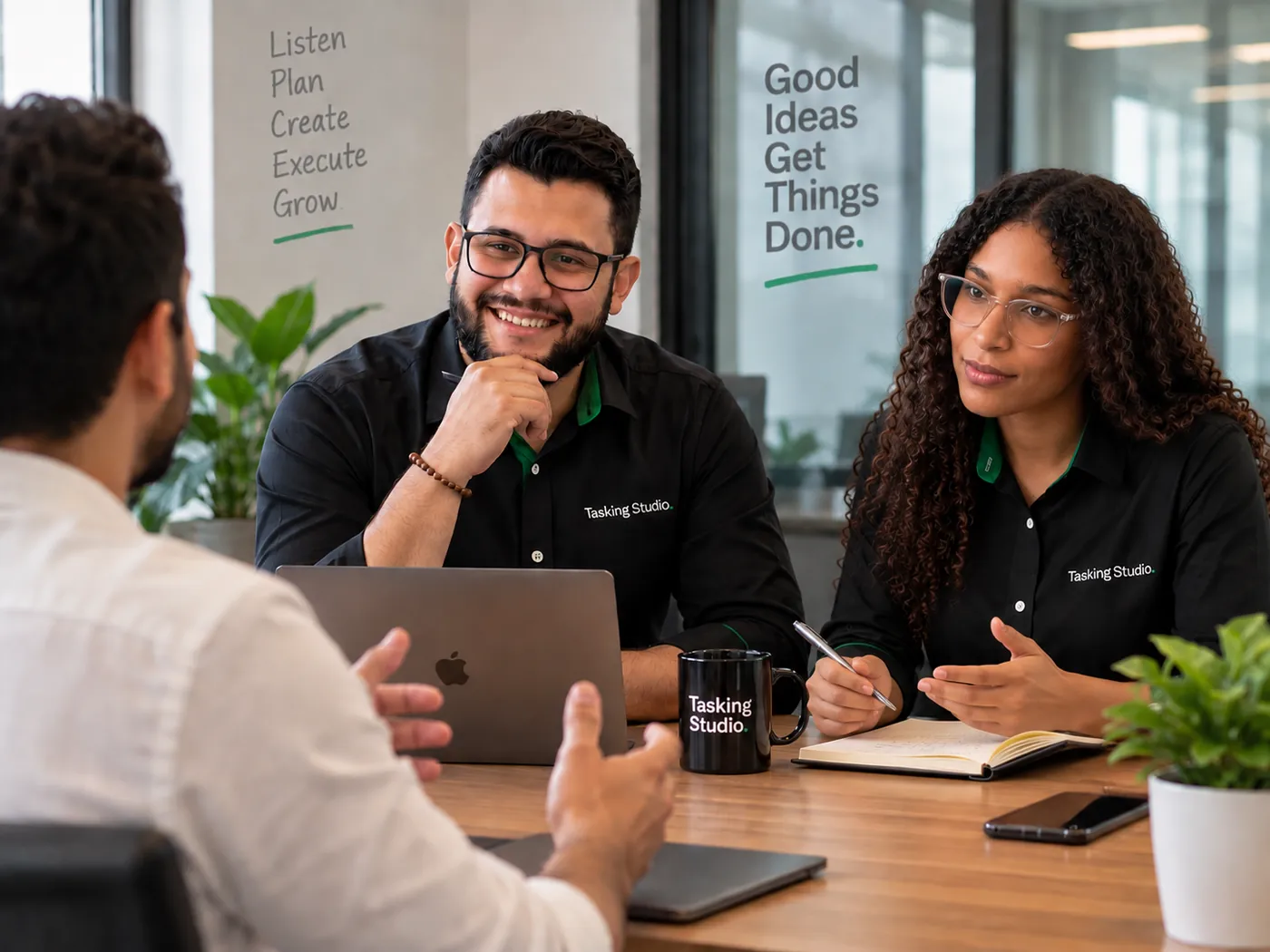
We learn what you're trying to accomplish, bring together the people who can help and build a working relationship around what your business actually needs.
Hiring help shouldn't mean managing five more people.
The support should reduce complexity — not move it onto you.
Six relationships, six briefings, six versions of the same context — and the coordination lands on the client.
Bring the capabilities together around the business.
Instead of forcing every need into a separate relationship, Tasking Studio can bring different specialists into the same working system.
Not every client needs every capability.
The team should match the work.
Before we decide what to make, we need to understand what you need.
The first conversations are about the business, the challenge, what already exists, what's working, what's getting in the way and where additional support could make the biggest difference.
What do you do?
What are you trying to accomplish?
Who are you trying to reach or serve?
What already exists?
What can your internal team already handle?
Where is work getting stuck?
What matters first?
We don't start with a service package.
We start with the need.
Understand.
Plan.
Build.
Review.
Keep moving.
We begin with the business, objective, audience, existing work and actual problem that needs to be solved.
We clarify priorities, scope, responsibilities and which Tasking capabilities should be involved.
The team establishes what needs to happen, what depends on what and how the work should move forward.
Design, marketing, automation, content, web, video, podcast — or several capabilities together.
We review quality, accuracy, consistency and whether the work still supports the original objective.
Client feedback becomes part of the working process rather than something saved only for the end.
The final output is prepared for the environment where it actually needs to work.
For ongoing relationships, what we learn from one cycle informs the next.
The process adapts. The objective stays visible.
Different specialists.
One coordinated team.
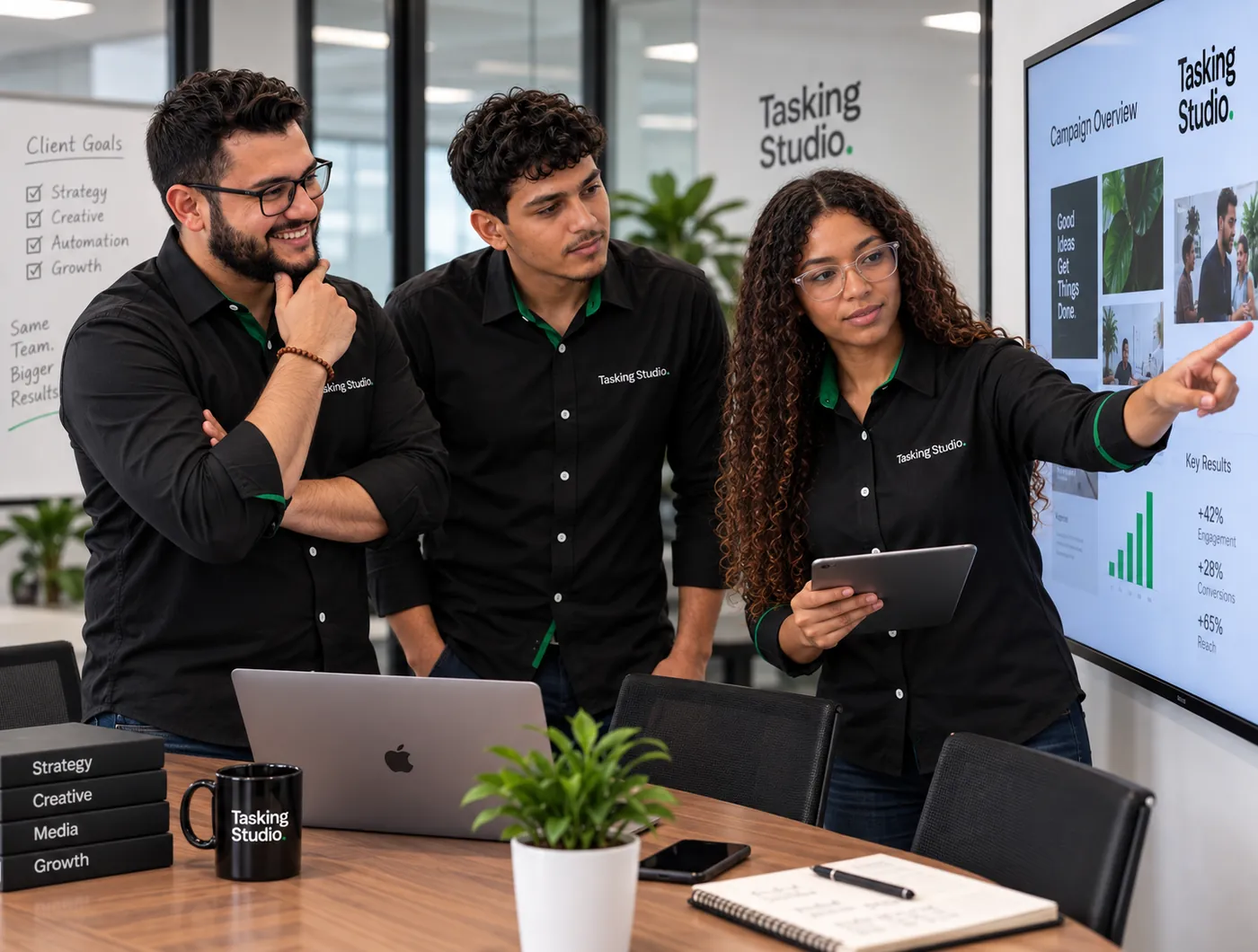
When a project requires multiple capabilities, those people should be able to work with each other — not rely on the client to carry information from one specialist to another.
You should be part of the work — not the project manager for everyone doing it.
The client communicates with Tasking around the objective. Tasking coordinates the disciplines involved.
Your Tasking team
depends on what you need.
Different engagements require different combinations of skills. The team can be shaped around the work instead of forcing every client into the same structure.
Use the capabilities you need now. Add others when the work requires them.
Good work needs
good communication.
Communication is part of the service.
Clients should know what is happening, what needs their input and what comes next. Communication should make the work easier to follow — not create another stream of noise.
Know who is responsible for what.
Know what the team is working on.
Communicate meaningful progress rather than activity for activity's sake.
Make it easy to review work and respond.
Keep the reason behind the work visible.
Surface blockers and questions early.
Feedback shouldn't arrive only when everything is finished.
The right moments for review depend on the work, but the principle stays the same: get alignment while changes are still useful.
Earlier alignment prevents expensive confusion later.
Someone has to check
the details.
Creative and operational work can fail in small ways: a broken link, incorrect copy, inconsistent branding, a mobile layout issue, the wrong file, a workflow that doesn't trigger or a video exported incorrectly.
Done isn't the same as checked.
What you need today may not be what you need next quarter.
A relationship may begin with one focused project and evolve as new needs appear.
The relationship can grow with the work.
Illustrative only — not a fixed schedule or required progression
Some needs have an ending.
Others keep moving.
A clear objective, defined work and a specific project lifecycle.
A continuing relationship where priorities and work can evolve over time.
A broader Tasking team supports connected areas of the business through one relationship.
Explore the Complete Solution →The working model should match the work.
Start with the problem.
Build the team around it.
“We need more consistent marketing.”
“Our team is doing too much manual work.”
“We're launching something new.”
“We have great content but no system around it.”
“We need help across the business.”
Tasking could begin with the highest-priority problems and expand the team as needed.
The starting point is different. The principle is the same.
Real people.
Different strengths.
One team.
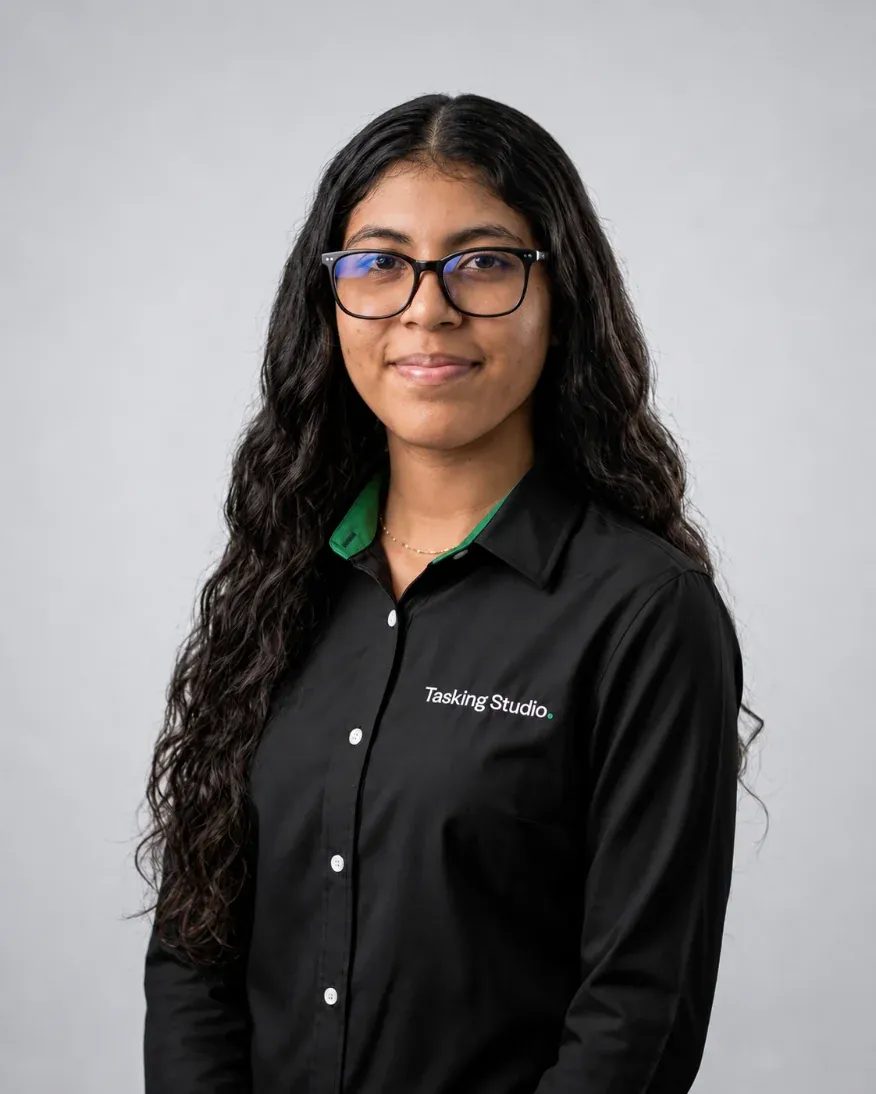
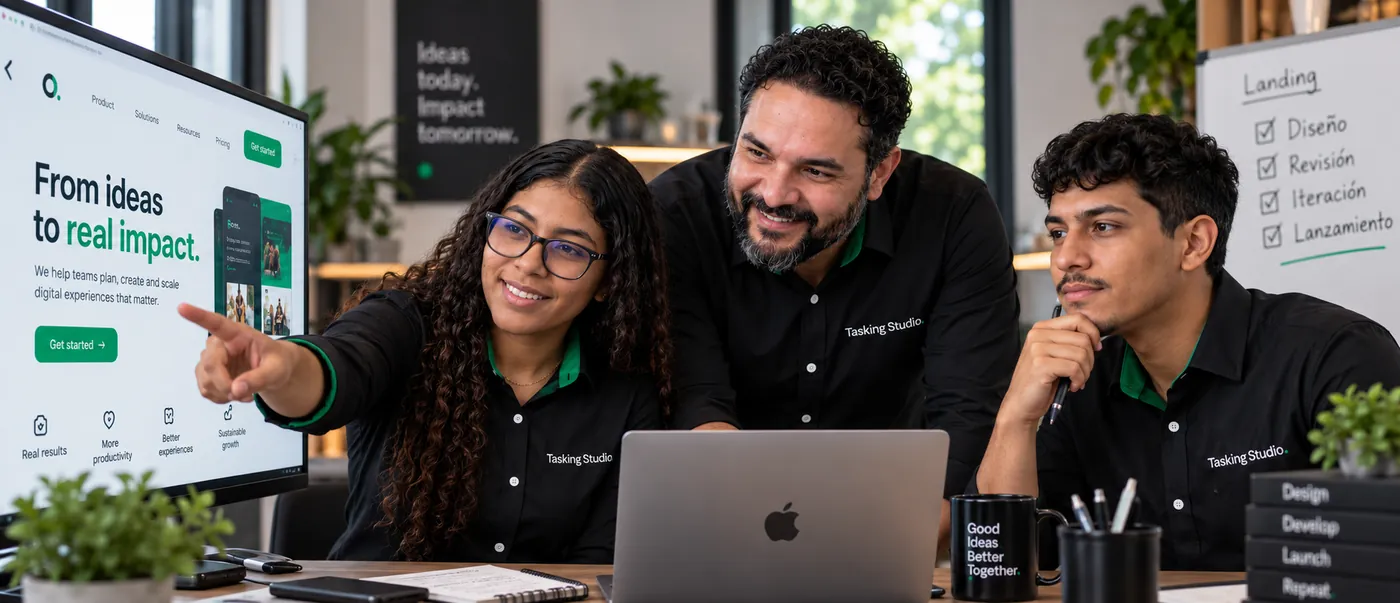
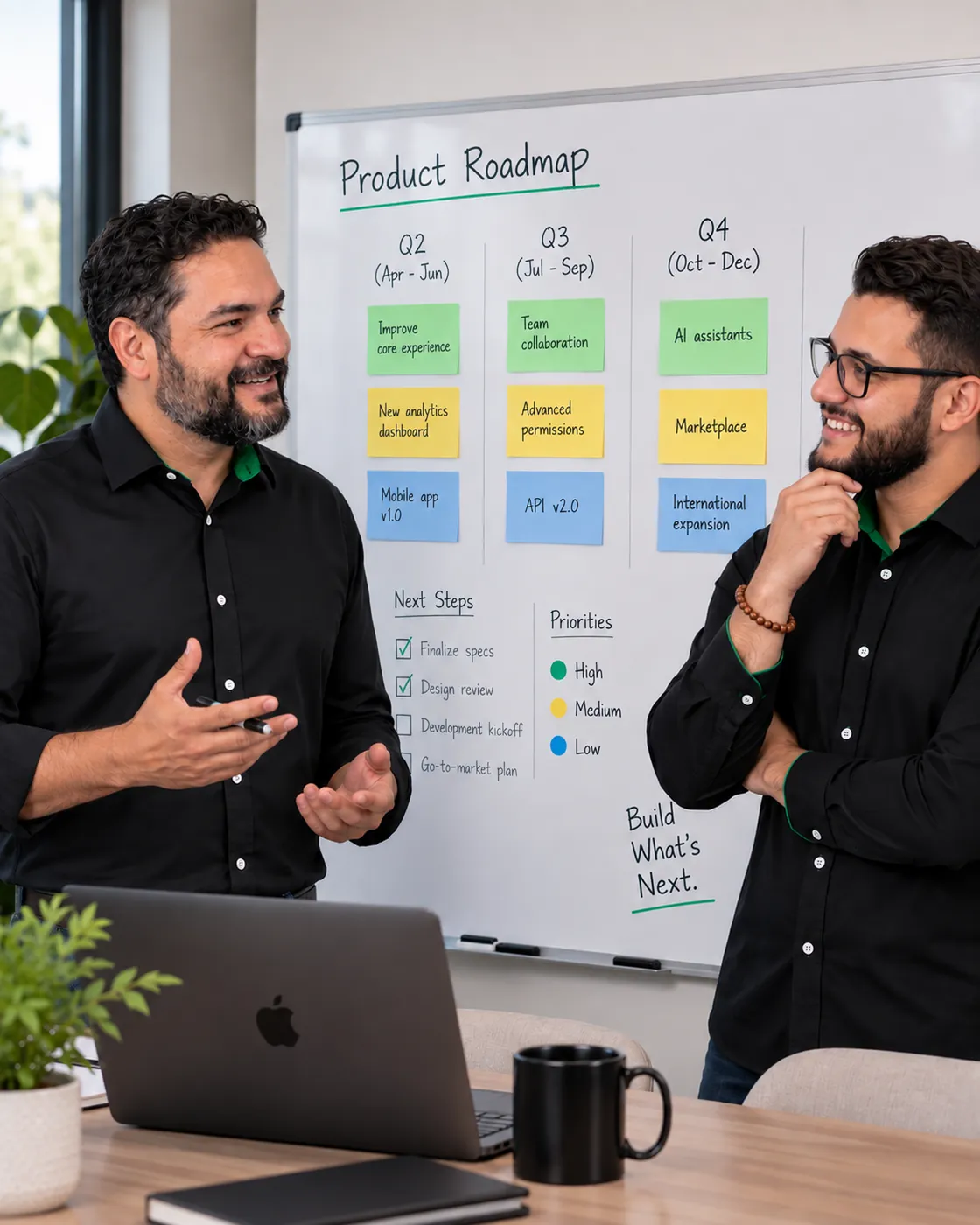
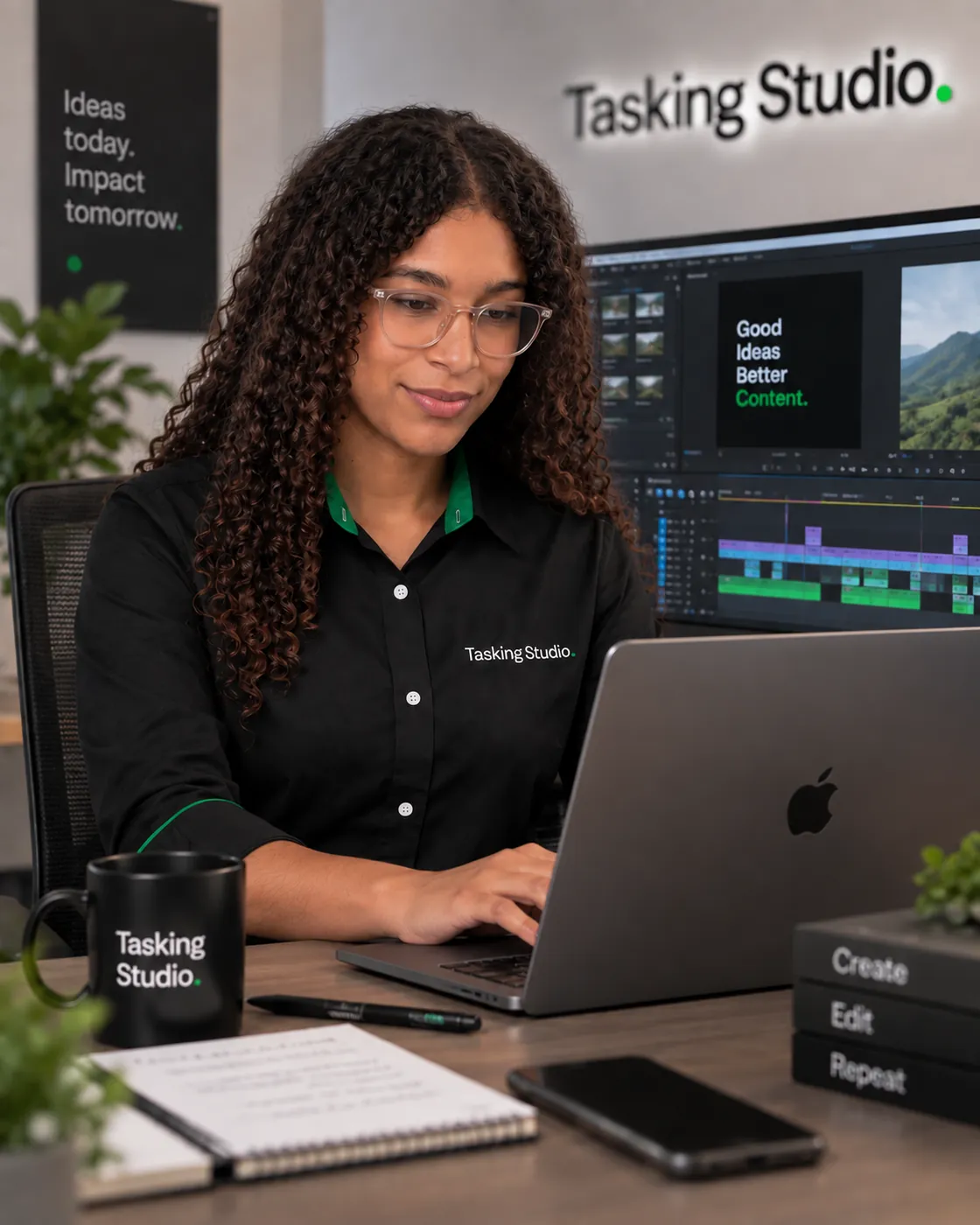
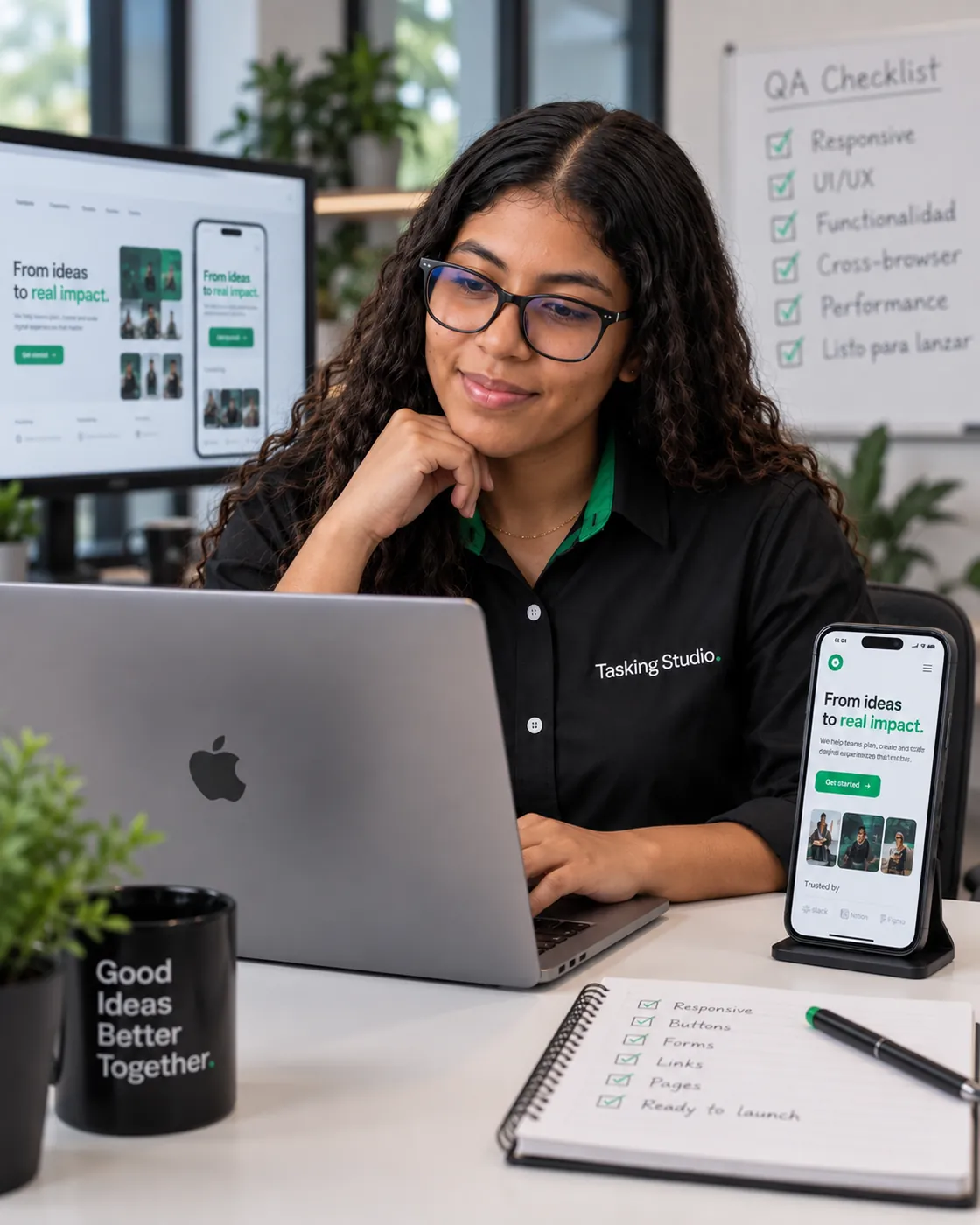
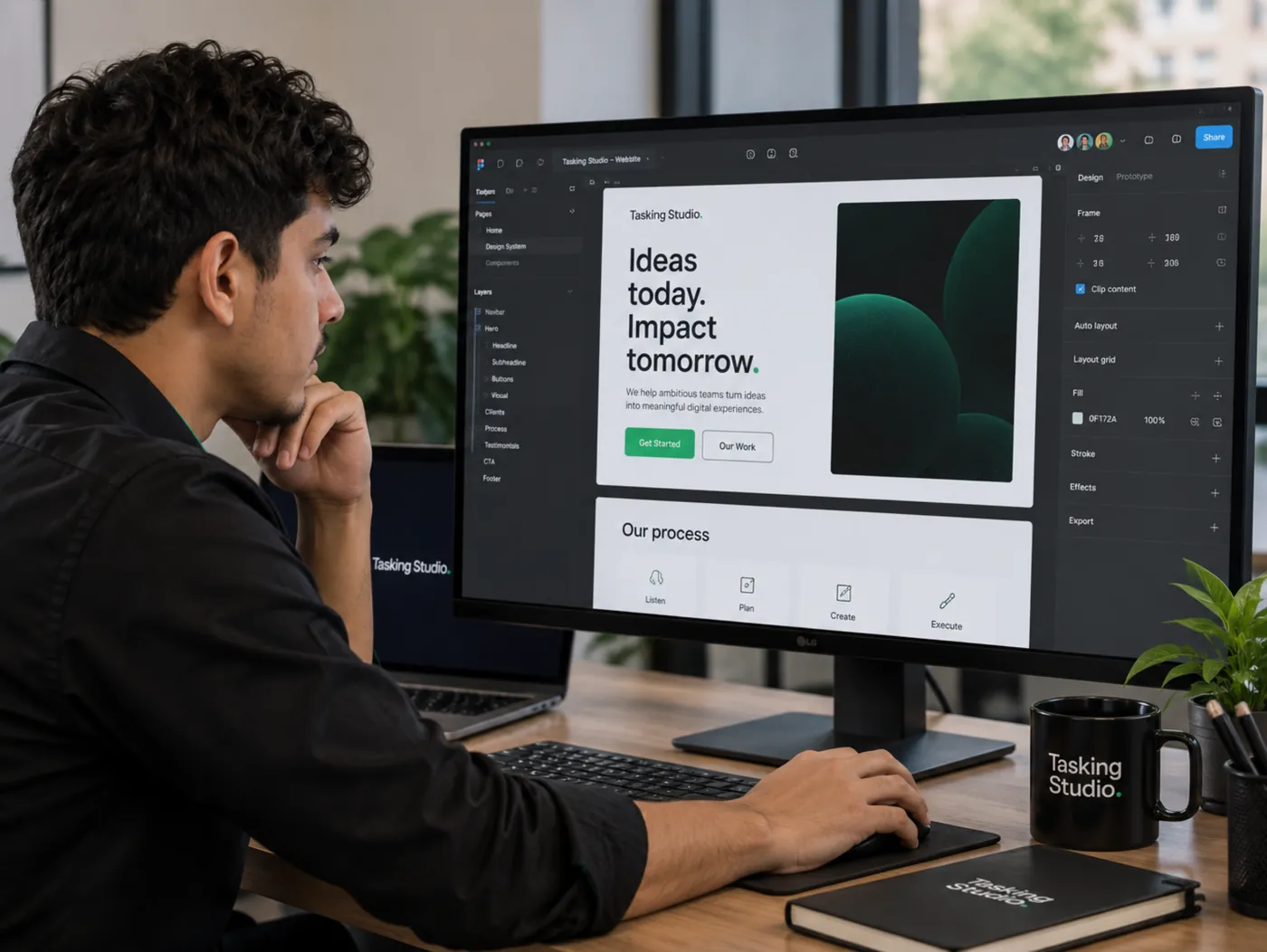
Your work is handled by people with different areas of expertise who collaborate based on what the project needs.


See how the work
actually gets made.
Less fragmentation.
More context.
Better collaboration.
People working on different parts of the business can understand the same objective.
Bring in different skills as the work changes.
Knowledge from one project can inform the next.
The client doesn't have to connect every external specialist manually.
Marketing, design, content, web and operations can support each other.
You know the people behind the work.
Clear.
Collaborative.
Useful.
Know why the work exists.
Keep relevant people informed.
Make progress visible.
Don't build assumptions into the final product.
Quality matters.
The plan can evolve when the situation changes.
The deliverable is not the objective.
We use the right tools
for the job.
Our work moves across strategy, design, content, production, marketing, automation and operations. We use a flexible set of professional and AI-assisted tools to help our team move faster, collaborate better and deliver stronger work.
 Adobe Creative Cloud
 Figma
Figma
 Google Stitch
 Adobe Premiere Pro
 Adobe Podcast
 Audacity
 CapCut
 Wondershare
 HeyGen
 Magnific
 ChatGPT
 Claude
 Nano Banana
 OpenArt
 Metricool
 Google Ads
 Meta
Meta
 ActiveCampaign
 HubSpot
Meta
HubSpot
Meta
 ManyChat
 Squarespace
Figma
Squarespace
Figma
Tools support the work.
People drive it.
These are the platforms our team works in. The thinking, the decisions and the quality come from the people using them.
One relationship.
More ways to help.
You may come to Tasking for one thing. The advantage is having a team that can support what comes next without starting a completely new relationship every time.
Start where you need us.
Build from there.
Listen.
Understand.
Build.
Review.
Improve.
Keep moving together.
Tell us what's
taking up your time.
You don't need to know which Tasking service you need before contacting us. Tell us what you're trying to accomplish, what's getting in the way and what your team already handles. We can start there.